.
Garden Diary - November 2025
All content included on this site such as text, graphics and images is protected by U.S and international copyright law.
The compilation of all content on this site is the exclusive property of the site copyright holder.
The Japanese art of Pickling & Fermenting, a book review
Tuesday, 18 November 2025
Pickling, as most of us are familiar with it, is a traditional method for keeping food over time. It is a way of putting summer in a jar. Cabbage becomes sauerkraut. Long established techniques turn cucumbers into a variety of pickles. There are also alternative techniques for what might be called quick pickles that are ready in a short while. These do not have the extended shelf life of processed, water bath canned pickles and must be kept refrigerated. Simple, quick and easy, they add zesty crisp flavor to your meals. Interested? I have just the book to recommend to offer a plethora of options and possibilities.
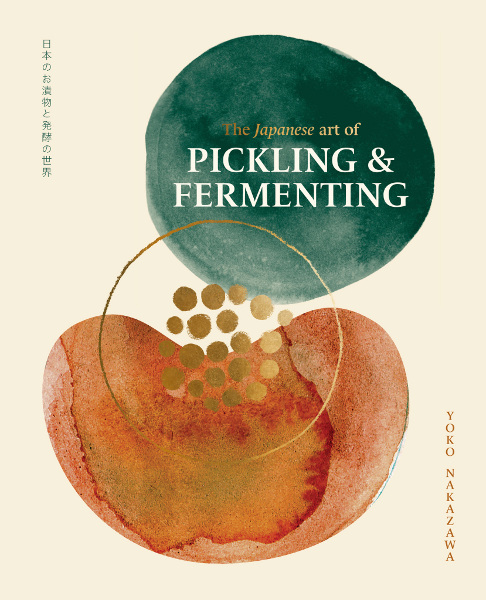
Watercolors by Michelle Mackintosh, photography by Rochelle Eagle, all rights reserved
The Japanese Art of Pickling and Fermenting by Yoko Nakazawa
published by Smith Street Books, Melbourne, Australia in 2025
published in the United States by Rizzoli International Publications
This is a beautiful book on several levels. First and foremost, of course, is the information
and recipes provided. Beginning with easy quick pickles, continuing to more intricate ones.
You may have heard, "We eat with our eyes first." Food attractively plated up attracts us.
Here, beautiful full page photographs and watercolor illustrations capture our attention.
.
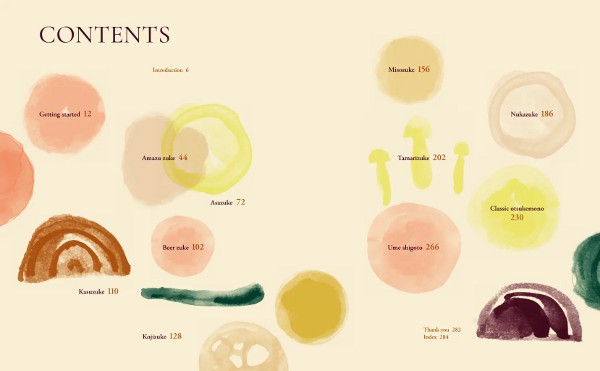
Image provided by the publisher. Watercolors by Michelle Mackintosh, all rights reserved
Traditionally, contents pages are plain text. Here, it is done with watercolors that resemble
slices of vegetables. I recognize a slice of lotus root, another of onion, green beans.
Let's begin by defining our terms. Yoko Nakazawa explains that Japanese otsukemono are vegetables (and sometimes fish) that are preserved by being salted or fermented with salt or Japanese fermented seasonings such as miso, tamari, or vinegar. What can you pickle and ferment? Apparently, just about any vegetable. What's the difference between pickling and fermenting? Here, her explanations describe why these are both safe methods of preserving vegetables, long term or short term. Explanation of the different types of zuke=pickles (depending on what, besides salt is used, such as soy sauce, mirin, sake lees or other options. Whether they are asazuke=lightly pickled, furuzuke= aged pickles.
Much of the necessary equipment are items you already have in your kitchen: food-grade plastic containers, glass jars, even ziplock bags. Intrigued and happily becoming involved? Perhaps consider enamel containers. Wooden barrels are mentioned too.
In addition to fresh vegetables (starting with what might be seasonally available is a good choice) otsukemono require salt (directions are provided for making your own from sea water!) and vinegar.
Let's begin with one of her basic recipes for an amazu zuke, a simple, sweet vinegar pickle. There will be variation depending on the kind of vinegar you choose: grain vinegar, apple cider vinegar, rice vinegar, persimmon vinegar (purchased or homemade - directions are provided.) Sweet vinegar pickling is, we are assured, a fail-safe method.
.
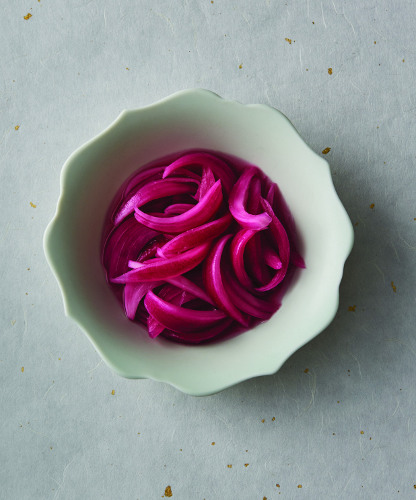
Image provided by the publisher. Photography by Rochelle Eagle, all rights reserved
Combine 1 fl. oz of vinegar, 5 grams sugar, and 2 grams of salt in a bowl. Stir
until sugar and salt are dissolved. Peel a red onion, cut into wedges and place
in a bowl. Pour liquid over onion, weight down with a plate on top. Refrigerate
for at least 3 days until onion becomes a nice red-pink color. Store in a clean jar,
in the refrigerator for up to one month. Now, wasn't that easy! You can do it!
Does three days sound tedious? How about 30 minutes? Kouhaku namasu means "red and white" in Japanese, which perfectly suits this combination of daikon radish and some carrot. Peel, slice daikon diagonally, ditto carrot. Vinegar, sugar, salt, and - optionally - some citrus juice. A couple of simple steps, then combine vegetables and pickling liquid, refrigerate from 30 minutes to overnight. Sprinkle with toasted sesame seeds when serving.
Every couple of pages offers possibilities for variations on a theme of simple pickles. Just slice, make a pickling liquid, combine for some period of time, then enjoy. Asazuke are quick seasonal pickles that have a brief pickling time in a light pickling liquid, resulting in a dish, we're told, to enjoy much like a salad. So simple, quick and easy that you can prepare them while making dinner. Soba (noodle) and rice dishes are enhanced with this sort of quick pickle side dish. Prepare a crisp and crunchy celery asazuke
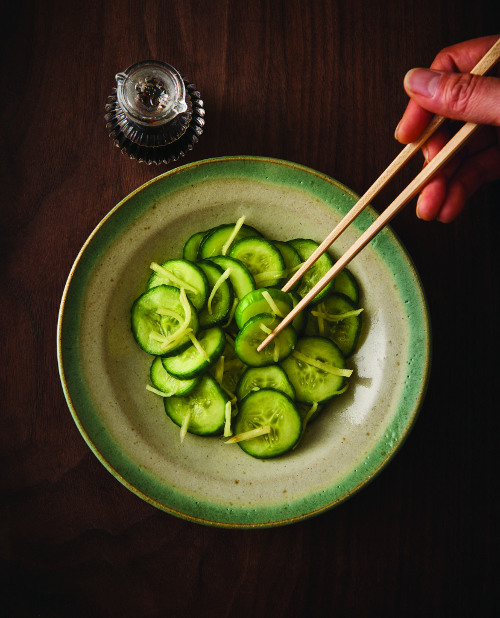
Image provided by the publisher. Photography by Rochelle Eagle, all rights reserved
or a cucumber and ginger asazuku
Recipes at the front of the book are quite simple. They may explore vegetables you never considered pickling, such as eggplant. Or using beer, cider, or perry (pear cider) for the pickling liquid.
A deeper dive into the book begins to suggest unfamiliar ingredients, such as shiso seed pods pickles. Shiso (Latin name Perilla frutescens var. crispa) is an easily grown, even enthusiastic, annual. I happen to grow the purple leaf form and have
used the leaves to make pickled baby ginger.
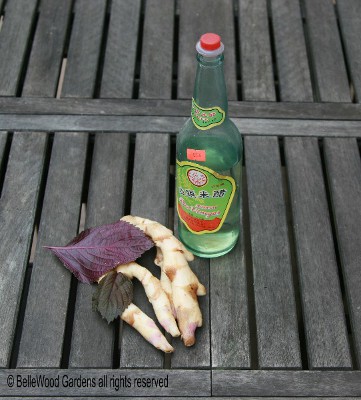
copyright BelleWood Gardens all rights reserved
But I had no idea that the seed pods might also be a possibility.
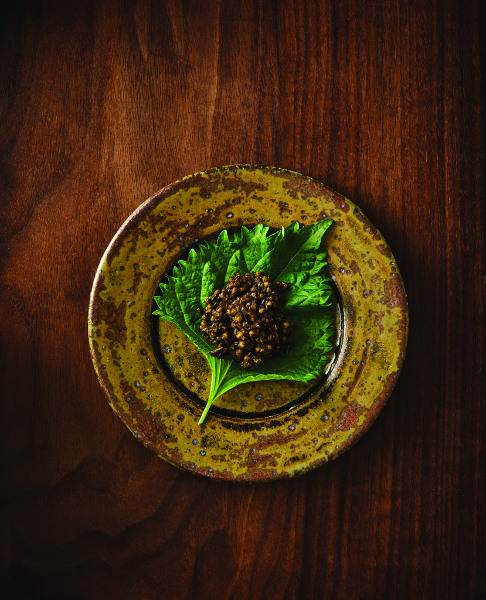 .
.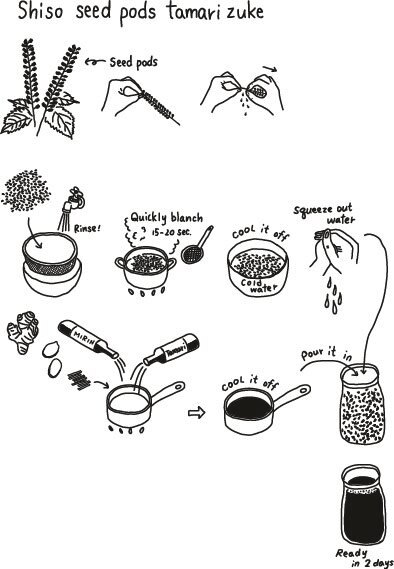
Images provided by the publisher. Drawings by Yoko Nakazawa, Photography by Rochelle Eagle, all rights reserved
Late next summer I will have to forage in my garden and try this recipe. The drawings and text will guide me.
Ready to explore an intricate option? Remember it has been said that we eat first with our eyes. And this chrysanthemum turnip amazu zuke certainly qualifies. "A lot simpler than it looks." she claims. The pickling part, yes, is much the same as the others. What is intricate is the cutting of a turnip into a chrysanthemum.
 .
.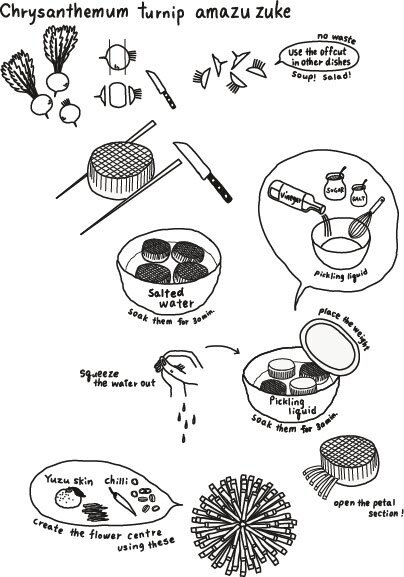
Images provided by the publisher. Drawings by Yoko Nakazawa, Photography by Rochelle Eagle, all rights reserved
Fortunately, as well as the descriptive how-to text, Yoko Nakazawa made some very useful how-to drawings to guide us.
Then the book takes us to fermented pickles such as kasuzuke, pickles that use sake lees, the solids that remain after the sake is drained off. Kojizuke, an edible mold that grows on rice. The ability to make these pickles depends on whether they my be sourced, and also time. Unlike the quick pickles, some take three months.
There is enough in the earlier chapters that offer quick recipes for spring / summer / fall vegetables. Remember these are not the long term, sealed in a jar pickles with which you might already be familiar. They are tasty embellishment to quickly enhance a meal or snacks. You'll have fun not just reading but also trying the possibilities suggest in "The Japanese art of Pickling & Fermenting"
 .
.
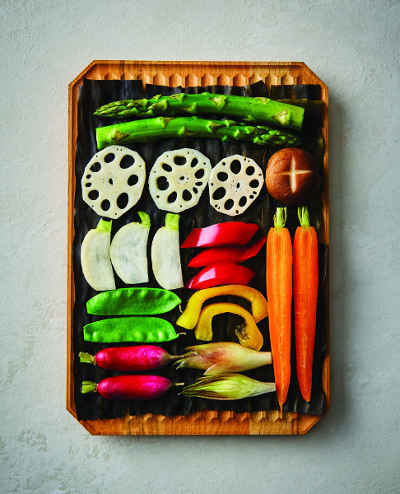
Image provided by the publisher. Photography by Rochelle Eagle, all rights reserved
The Japanese art of Pickling & Fermenting
text and illustrations by Yoko Nakazawa, photography by Rochelle Eagle
First published in the United States in 2025
by Rizzoli International Publications, Inc.
originally published in 2025 by Smith Street Books, Melbourne, Australia
ISBN 978-1-9232-3913-5
hardbound, $35.00
A review copy of this book was provided by the publisher
If you have any comments or questions, you can e-mail me: jgglatt@gmail.com
Back to November
Back to the main Diary Page